

For stationary engines powered by natural gas or biogas, choosing an oil based solely on viscosity is not enough. Gas quality, operating conditions, and manufacturer specifications also influence lubricant selection.
In Puerto Rico, American Petroleum distributes the Petro-Canada SENTRON line of natural gas engine oils, designed for stationary engines used in power generation-specifically cogeneration and industrial processes. Learn about the features of the three products available in our catalog and their main applications.
Natural gas engine oils distributed by American Petroleum in Puerto Rico
At American Petroleum, we offer three low-ash Petro-Canada SENTRON SAE 40 lubricants. LD 5000 and LD 8000 are primarily intended for engines that run on natural gas, while CG 40 PLUS is formulated for applications using biogas and gases that may contain higher levels of contaminants.
The selection depends on the engine’s characteristics, the quality of the gas, and the manufacturer’s recommendations. You can find more information in our gas engine lubricant guide.
Petro-Canada Sentron LD 5000: for natural gas stationary engines
SENTRON LD 5000 helps control oxidation and the formation of varnish, sludge, and carbon deposits in four-stroke stationary engines. Its SAE 40 formulation, with a typical sulfate ash content of 0.57%, is intended for equipment requiring low-ash lubricants.
Petro-Canada recommends this lubricant for certain Caterpillar, Jenbacher, and Waukesha engines that require low-ash oils. It is important to confirm compatibility based on the model and the manufacturer’s specifications.
American Petroleum carries SENTRON LD 5000 in its catalog in tote containers (SKU 11010) for industrial supply requests in Puerto Rico.
Petro-Canada Sentron LD 8000: for demanding stationary operations
In power generation or compression engines operating under heavy loads, oil degradation can affect maintenance schedules.
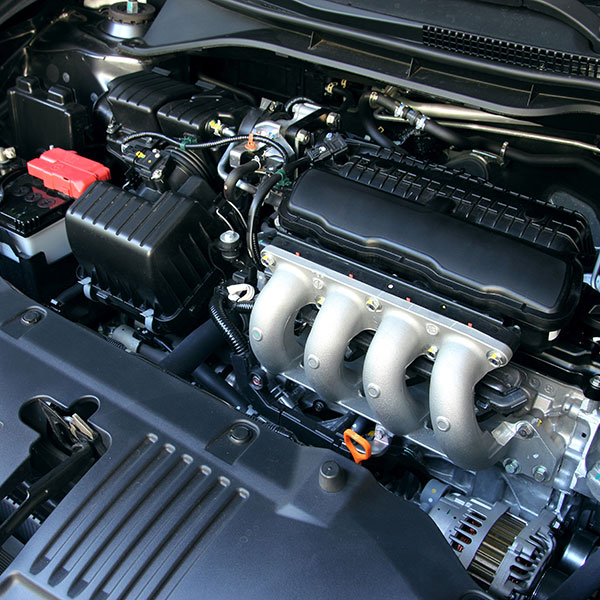
SENTRON LD 8000 is a low-ash SAE 40 lubricant (0.52% typical), formulated to resist oxidation and nitration and help control deposits. It can be evaluated in stationary engines that use natural gas or certain pre-treated gases.
In a test conducted by Petro-Canada using a Caterpillar G3500 TALE engine-used for natural gas compression and operating under loads exceeding 90%-oil change intervals of up to 8,000 hours were documented. This result corresponds to the conditions of that specific test and does not represent a universal interval.
American Petroleum offers this product in its catalog in tote containers (SKU 11020).
Petro-Canada Sentron CG 40 Plus: for engines using biogas and landfill gas
Biogas, landfill gas, and gas from wastewater treatment may contain compounds that place increased demands on the lubricant.
SENTRON CG 40 PLUS is a low-ash SAE 40 oil (0.52% typical), developed to help control deposits and protect against corrosion in four-stroke stationary engines that use these fuels.
In applications with severe contamination, the lubricant does not replace the gas treatment required to meet the engine manufacturer’s specifications.
American Petroleum offers this product in tote containers (SKU 11050).
To learn about the characteristics and applications of the three products, please refer to Petro-Canada’s SENTRON technical guide.
How to order Sentron gas engine oils in Puerto Rico
Do you need lubricant for a gas-powered generator or stationary engine? At American Petroleum, we can help you identify the available options based on your equipment’s specifications.
To request a quote for gas engine oils, please provide us with the engine make and model, the type of gas it uses, and the quantity required. All three SENTRON products are included in our catalog of industrial lubricants in tote containers.
Call (787) 794-1985, email info@americanpetroleumpr.com, or fill out our contact form to request information and confirm availability.
Frequently Asked Questions About Gas Engine Oils
How often should the oil be changed in a gas engine?
There is no single interval. It depends on the manufacturer, operating hours, load, and fuel quality. In stationary engines, oil analyses allow you to monitor nitration, oxidation, viscosity, and alkaline reserve to plan oil changes. Keeping records is also important for the maintenance of diesel-powered electric generators.
Why do gas engines require a different oil?
The combustion of natural gas presents specific challenges regarding oxidation, nitration, deposit formation, and ash content. Therefore, an oil used in diesel-powered generators is not automatically suitable for a gas engine, even if it has the same viscosity.
Can I use CK-4 diesel oil in a CNG engine?
It should not be selected solely because it meets the API CK-4 standard, a category primarily intended for diesel engines. Some CNG engines require specific formulations and approvals. Before using a different lubricant, it is necessary to check the manufacturer’s recommendations.
What oil does a natural gas bus in Puerto Rico use?
It depends on the make, model, and engine specifications. The SENTRON LD 5000, LD 8000, and CG 40 PLUS mentioned in this article are formulated primarily for stationary engines. They should not be recommended for CNG buses without confirming their compatibility.
Is Sentron CG 40 Plus suitable for natural gas generators?
It is specially formulated for certain stationary engines that use biogas and gases that may contain contaminants. If the generator runs on conventional natural gas, it is advisable to review the manufacturer’s recommendations and evaluate compatible alternatives from the SENTRON line.
Where can I find Petro-Canada Sentron oil in Puerto Rico?
American Petroleum distributes SENTRON LD 5000, LD 8000, and CG 40 PLUS, which are listed in its catalog in tote containers. To confirm availability, request technical information, or arrange a quote, call (787) 794-1985, email info@americanpetroleumpr.com, or use our contact form.
What is the difference between a CNG engine and an LNG engine?
CNG stands for compressed natural gas, which is stored at high pressure in a gaseous state. LNG stands for liquefied natural gas, which is stored at cryogenic temperatures. Both can be used in engines designed for natural gas. However, the choice of lubricant depends on the engine’s design and specifications, not just on how the fuel is stored.