

In the Caribbean, where fuel is only possible thanks to a structured operation behind it, maintaining ISO storage tanks is not a simple operational procedure. It is a determining factor in ensuring the region’s energy continuity.
At American Petroleum and our export subsidiary, Royal Petroleum, we operate more than 270 ISO tanks with capacities between 5,000 and 6,500 gallons for transporting gasoline and diesel to the Virgin Islands and other Caribbean destinations.
Each unit is exposed to a constant marine environment, frequent loading and unloading cycles, and demanding logistical conditions. That is why maintenance is not optional. It is a structural part of our operation.
ISO storage tank maintenance
ISO tank maintenance is not a single activity. It is a structured system that combines preventive, corrective, and predictive maintenance. Each one fulfills a different function in the operation:
- Preventive maintenance reduces the likelihood of failures.
- Corrective maintenance resolves incidents when they occur.
- Predictive maintenance allows us to anticipate them before they affect logistics.
When these three levels work together, the supply chain remains stable. When one fails, the operation begins to become reactive.
Preventive maintenance of ISO storage tanks
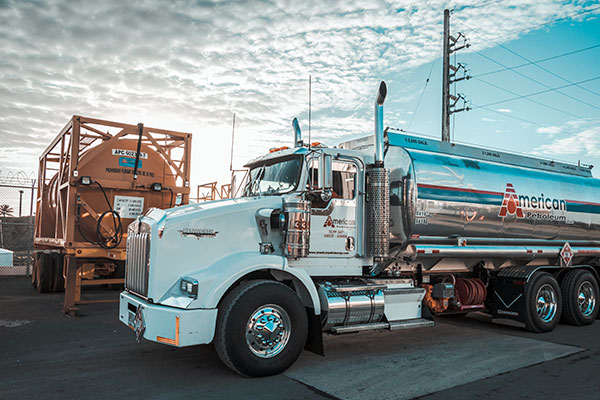
Its goal is to prevent the problem from occurring. In our operation, preventive maintenance of ISO storage tanks includes:
- Periodic external structural inspection:
- Verification of the integrity of the ISO tank body.
- Early identification of rust spots.
- Assessment of impact from handling or transport.
- Valve and closure system review:
- Checking for proper operation.
- Verifying tightness.
- Preventive adjustment or replacement of gaskets.
- Evaluation of rubber and support elements:
- Review of wear due to friction or exposure to saltpeter.
- Replacement before loss of functionality.
- Systematic external cleaning:
- Specialized washing to remove saltpeter.
- Removal of accumulated debris after each maritime cycle.
- Identification and labeling control:
- Confirmation of visible numbering.
- Validation of product identification.
- Immediate correction if there is visual deterioration.
This level is what sustains the operation. If preventive maintenance is carried out with discipline, the number of corrective interventions decreases significantly.
Corrective maintenance of ISO storage tanks
Corrective maintenance of ISO storage tanks comes into play when a condition is detected that already requires direct intervention. In these cases, we perform:
- Leak repair:
- Immediate removal from circulation.
- Technical inspection of the affected area.
- Certified mechanical repair before returning to operation.
- Replacement of damaged components:
- Replacement of defective valves.
- Replacement of compromised seals.
- Repair of affected structural areas.
- Post-incident interventions:
- Additional inspection after weather events.
- Review after impacts or irregular handling.
- Complete validation before reactivating the unit.
Corrective action should not become the operating norm. When an operation constantly relies on corrective action, it means that preventive action is not sufficient.
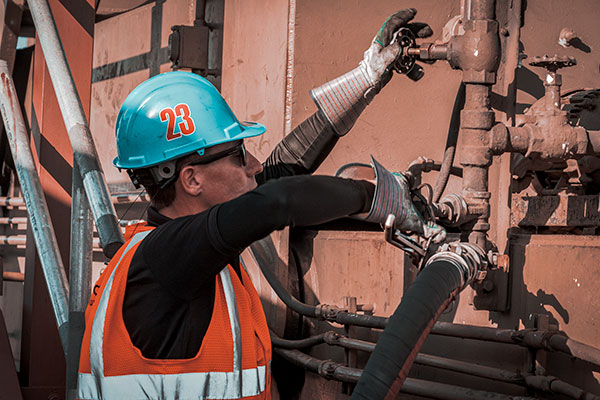
Predictive maintenance of ISO storage tanks
Predictive maintenance of ISO storage tanks raises the level of control. It is not limited to calendar-based reviews, but analyzes actual behavior and wear. In our operation, we apply:
- Assessment of historically vulnerable areas:
- Corrosion monitoring at critical points.
- Intervention before damage compromises structure.
- Analysis of operating cycles:
- Frequency of loading and unloading.
- Exposure time at the dock.
- Intensity of rotation between Puerto Rico and the islands.
- Historical record of interventions:
- Identification of repetitive patterns.
- Anticipation of recurring failures.
- Adjustment of maintenance frequency according to actual use.
Predictive maintenance reduces uncertainty. And in an island operation, reducing uncertainty means protecting supply.
Importance of ISO storage tank maintenance in the supply chain
An ISO tank out of service can disrupt the scheduling of multiple shipments. If rotation is delayed, inventory at the destination begins to be affected.
Proper maintenance allows you to:
- Prevent operational disruptions.
- Guarantee the quality of the fuel transported.
- Comply with environmental regulations.
- Optimize delivery times.
- Maintain a constant flow between Puerto Rico and the Caribbean.
Over time, we have found that the stability of an operation depends not only on the volume moved, but also on the discipline with which each unit is maintained.
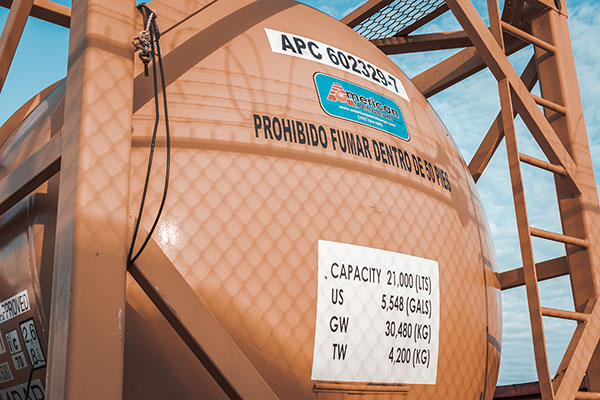
Risks of inadequate maintenance
When the maintenance of ISO storage tanks is put off, the problem is not just theoretical. It is reflected in daily operations and risks such as the following are assumed:
- Product contamination. If cleaning is not done properly or seals begin to fail, impurities can enter. In fuels, this ends up affecting equipment at the destination, generating complaints and complications with customers.
- Financial losses. A leak that is not detected in time means a direct loss of product. It also increases repair costs and can cause delivery delays that affect commercial agreements.
- Environmental and safety risks. An incident at the dock or during maritime transport immediately triggers regulatory processes. This can result in fines, investigations, and operational pressure.
- Supply chain disruptions. Every ISO tank that goes out of service reduces movement capacity. On islands that are totally dependent on imports, inventory can start to dwindle in a matter of days.
- Increased logistics costs. When a unit fails without warning, shipments must be reorganized, cargo moved, and routes adjusted. This lack of coordination affects efficiency and costs.
Operational reliability that sustains the Caribbean’s energy supply
At American Petroleum and Royal Petroleum, we maintain more than 270 units in constant rotation. This involves real planning, continuous monitoring, and technical control. It’s not just about moving product. It’s about ensuring that every shipment from our tank rental service reaches its destination without affecting critical inventories.
In addition, we operate each unit under defined ISO storage tank maintenance protocols that include:
- Specialized washing to remove saltpeter after each maritime cycle.
- Structured technical maintenance.
- Certified mechanical repairs.
- Rigorous identification and labeling control.
- Technological systems for tracking inspections.
- Filling protocols under clear operating standards.
The process does not end when fuel is loaded into our gasoline tanks and diesel tanks. We ensure that every ISO tank that leaves for the Virgin Islands is in optimal condition to fulfill its function without putting additional pressure on the supply chain.