

The evolution of gasoline prices continues to be a topic of great interest for businesses and consumers in Puerto Rico. Looking ahead to 2026, this interest is increasing in the face of a global environment with adjustments in energy production, regulatory changes, and demand that continues to adapt to new economic and climatic conditions.
For commercial transportation, fleets, distributors, and consumers in general, understanding how the gasoline market moves is not just informative. It is a key tool for planning expenses, protecting business continuity, and making better decisions about consumption and supply.
Current gasoline market situation
The gasoline market is influenced by several factors that act together. In general terms, its behavior is linked to global fuel supply and demand, as well as the refining capacity available in each region.
Supply depends mainly on crude oil production, inventory levels, and refinery operations. When inventories are low or refining capacity is affected by maintenance, weather events, or logistical problems, the market tends to experience price pressure.
Demand, on the other hand, is related to economic activity and seasonal factors. Periods of increased activity, such as peak tourist seasons or summer months, tend to increase gasoline consumption. In Puerto Rico, where most fuel is imported, these changes are reflected more quickly.
Crude oil continues to be the main benchmark for gasoline prices. Although it is not the only influencing factor, its variations directly affect production costs and, consequently, the final price.
Factors that will influence gasoline prices in 2026
Looking ahead to 2026, several factors could influence gasoline price behavior. One of the most important is global production and refining capacity. It is not enough for petroleum to be available; refineries must also be able to process it in a stable and continuous manner.

Environmental regulations and fuel standards will continue to have a significant impact. In various markets, regulations related to emissions and fuel composition have been strengthened. These changes often require adjustments to refining processes, which can affect operating costs.
Geopolitical tensions and international trade continue to be sensitive variables that affect gasoline prices. Conflicts, sanctions, or changes in trade agreements can affect supply routes and create uncertainty in the markets. Although these events do not always have immediate effects, they do influence overall price behavior.
It is also important to consider mobility and tourism. As tourism activity remains stable or grows, demand for gasoline tends to increase. In economies where land transportation is essential for trade and services, this factor becomes even more relevant.
Technological trends that will impact gasoline prices
Technology continues to influence how gasoline is produced and consumed. One of the most visible trends is the use of biofuel blends, driven by emission reduction targets and regulatory compliance. Their adoption depends on current regulations and the availability of these components.
Gradual improvements in engine efficiency also play a role. More efficient vehicles can help moderate consumption growth, especially in newer fleets. However, this impact is usually gradual and does not eliminate dependence on gasoline in the short term.
In addition, there could be changes in additives and emissions regulations. Adjustments in fuel formulation, although technical, can influence production and distribution costs. For this reason, many companies are closely monitoring these changes to anticipate possible impacts on their operations.
Gasoline price scenarios for 2026
Given the complexity of the market, it is more prudent to talk about scenarios than specific figures. A moderate scenario envisages relative stability in production and refining, with normal variations associated with seasonality and specific events. In this case, the price could fluctuate without drastic changes.
A scenario of greater pressure considers disruptions in the supply chain, increases in regulatory costs, or a sharp upturn in global demand. Under these conditions, the market could face greater volatility and gradual upward adjustments.
A more stable scenario would occur if supply and demand remain balanced and external tensions are limited. In this context, prices would tend to move within ranges similar to those observed recently, with minor adjustments.
Strategies for companies facing gasoline price volatility
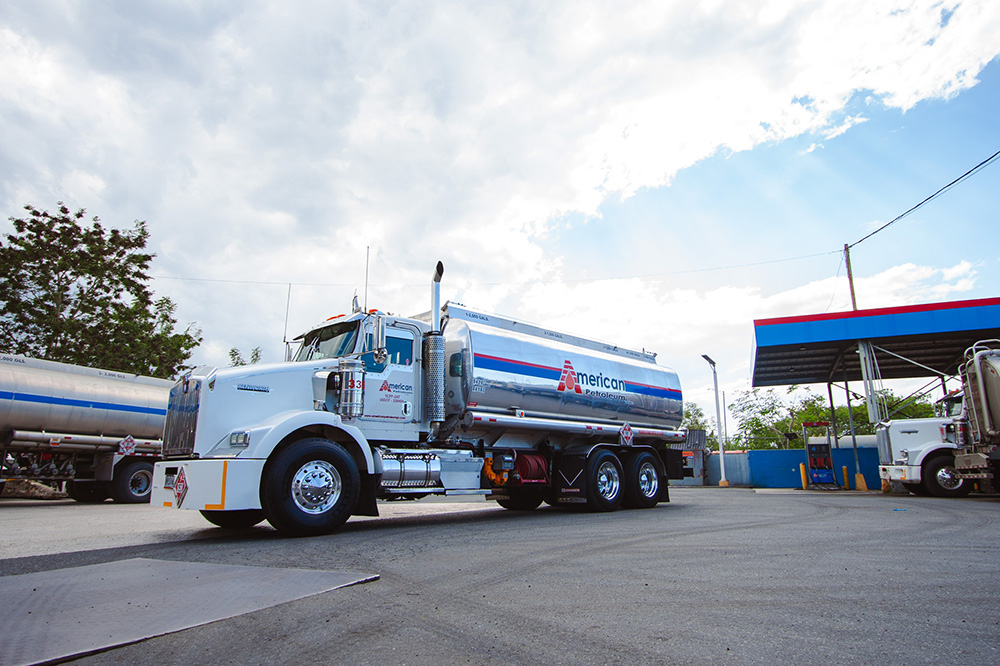
In a constantly changing market, companies can take concrete actions to better manage their fuel costs:
- Periodically review gasoline consumption to identify excesses, inefficient routes, or habits that can be adjusted without affecting operations.
- Keep fleets and equipment in good condition, as proper maintenance helps reduce consumption and avoid unnecessary expenses.
- Plan fueling in advance, considering peak seasons or events that may affect availability.
- Work with reliable suppliers who offer consistent supply and planning support.
- Use simple control tools, such as gasoline cards and consumption reports, to enable greater visibility and better decision-making.
These practices do not eliminate market volatility, but they help companies operate with greater order and predictability.
How American Petroleum helps companies manage gasoline consumption in 2026
American Petroleum helps companies in Puerto Rico manage their gasoline consumption more efficiently and in a more organized manner. Through fleet cards, quality gasoline supply, and reliable deliveries, it offers practical solutions to support daily operations and cost planning.
For guidance or to request a quote, contact your account representative or write to info@americanpetroleumpr.com. Preparing your business with a fuel strategy aligned with the challenges of 2026 is an important step toward more stable and efficient operations.
Sources consulted:
- U.S. Energy Information Administration. “EIA forecasts U.S. crude oil production will decrease slightly in 2026.” EIA, https://www.eia.gov/todayinenergy/detail.php?id=66844.
- “2026 Gasoline Price Forecast: What to Expect?” Stout, https://www.stout.com/en/insights/commentary/2026-gasoline-price-forecast-what-expect
- “Five energy market trends to track in 2026, the year of the glut.” OilAndGas360, https://www.oilandgas360.com/five-energy-market-trends-to-track-in-2026-the-year-of-the-glut-bousso/.
- “Goldman forecasts lower oil prices in 2026…” GBM.com, https://gbm.com/media/noticia/goldman-preve-precios-del-petroleo-mas-bajos-en-2026-por-aumento-de-la-oferta/.
- “Short-Term Energy Outlook.” U.S. Energy Information Administration, https://www.eia.gov/outlooks/steo/pdf/steo_full.pdf
- Novaluz. “Fuel Price Outlook (2025–2026).” https://novaluz.es/perspectivas-del-precio-del-carburante-que-pueden-esperar-las-empresas-entre-2025-y-2026/
- “Goldman projects lower oil prices in 2026 as supply swells.” Reuters, https://www.reuters.com/business/energy/goldman-projects-lower-oil-prices-2026-supply-swells-2026-01-12/
- “Global fuel supply and demand outlook.” AOL / forecasts summary, https://www.aol.com/articles/forecasters-2026-cheapest-gas-since-100058977.html